Fresno Elite Epoxy Flooring: Industrial, Food Plant, Warehouse, Commercial & Garage Floor Coatings
Central Valley floors take heat, forklifts, fruit acid and wash-down. We specify for the actual exposure, prep by grinding or shot blasting, and get plants back in production fast. Free estimates from Madera to Hanford.
Licensed & Insured·Food Plant & USDA Systems·Shutdown-Window Scheduling·Se Habla Español
Fresno Elite Epoxy Flooring is a licensed and insured industrial and commercial floor coating contractor with over 15 years of experience installing resinous flooring in Fresno, CA.
Our work covers food and beverage plant flooring, packing house and agricultural processing floors, cold storage and freezer floors, winery, brewery and crush pad floors, dairy and creamery flooring, warehouse and distribution coatings, ESD and anti-static systems, chemical-resistant and novolac epoxy, medical and cleanroom flooring, urethane cement, quartz broadcast systems, decorative flake and metallic epoxy, polyaspartic and polyurea topcoats, garage floor coatings, concrete grinding and shot blasting, moisture vapor mitigation, mechanically polished and densified concrete, floor repair and joint filling, line striping and safety marking, commercial epoxy flooring, commercial kitchen and restaurant floors, showroom, retail and office floors, solid color epoxy coatings, and patio and pool deck coatings.
Every system is specified against the exposure rather than the catalog: what lands on the floor, at what temperature, how often it is washed, and what drives across it.
That is why a peach cannery gets urethane cement rather than epoxy, a freezer gets a system rated for thermal cycling, and a distribution aisle gets film build and joint filler rather than a pretty topcoat.
We grind or shot blast to an ICRI surface profile, test slab moisture to ASTM F1869 and F2170 before quoting, and cure to spec in Valley heat instead of racing it. Licensed, insured and bonded, over 100 verified customer reviews across Fresno, Madera, Kings and Tulare counties, written workmanship warranty, and se habla español.
Epoxy Flooring Work We Do in Fresno
Food & Beverage Plant Flooring
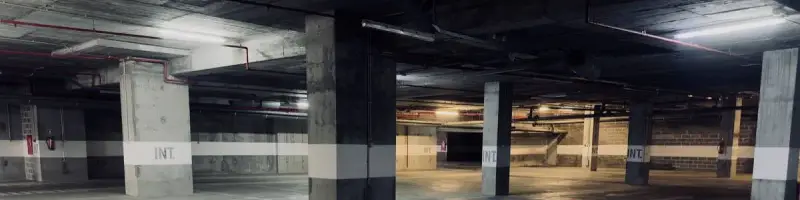
Food and beverage plant flooring is a sanitation specification with a floor attached, and in this valley it is most of what we install. A processing floor has to be jointless and non-absorbent so there is nowhere for product residue and bacteria to live, coved at every wall so there is no ninety-degree corner, sloped correctly to drains so water leaves rather than pools, cleanable at the temperatures and with the chemistry your sanitation crew actually uses, and slip resistant while wet with whatever you process.
Packing House & Ag Floors
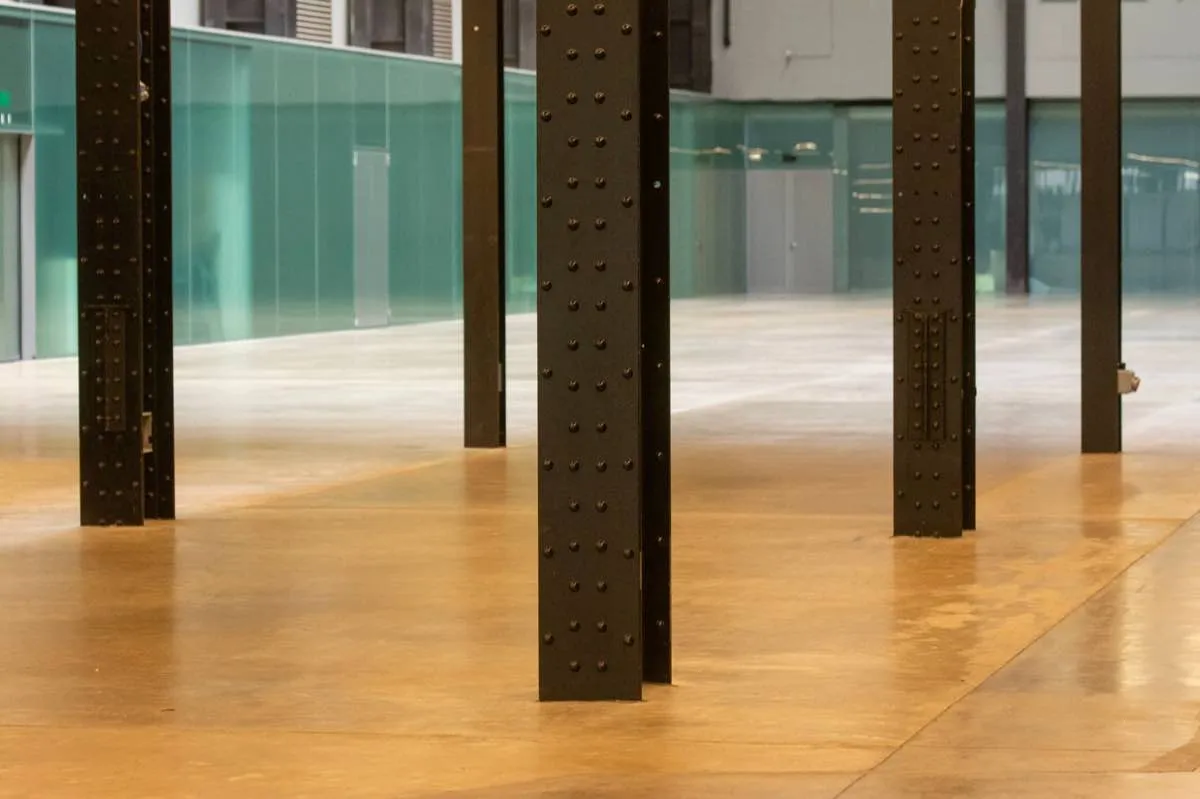
Packing house and agricultural processing floors are their own discipline, and the Central Valley has more of them per square mile than almost anywhere on earth. Stone fruit, table grapes, raisins, citrus, tree nuts, tomatoes, melons and everything that moves through a cooler on the way to a truck all pass across concrete, and the combination of wash water, fruit sugar, forklift traffic and a hard seasonal deadline makes these among the most demanding floors we coat.
Cold Storage & Freezer Floors
Cold storage floors fail in ways that surprise people, and almost all of it comes down to temperature moving through materials at different rates. A freezer floor is not simply a cold version of a warehouse floor.

Winery & Brewery Floors
Winery and brewery floors take a chemical beating that most people underestimate, and the culprit is not the product, it is the cleaning. A cellar floor sees tartaric acid from wine, lactic and acetic acid from fermentation, sugar from must and wort, caustic from clean-in-place cycles, peracetic acid and other sanitizers, and then hot water at temperatures that will debond a general-purpose epoxy over time.

Dairy & Creamery Flooring
Dairy floors are attacked by the product itself, which is what makes them different from almost every other food floor. Lactic acid, which forms as milk sours, is genuinely aggressive on cementitious surfaces and on standard epoxy, and it is present everywhere in a dairy operation regardless of how well the crew cleans.
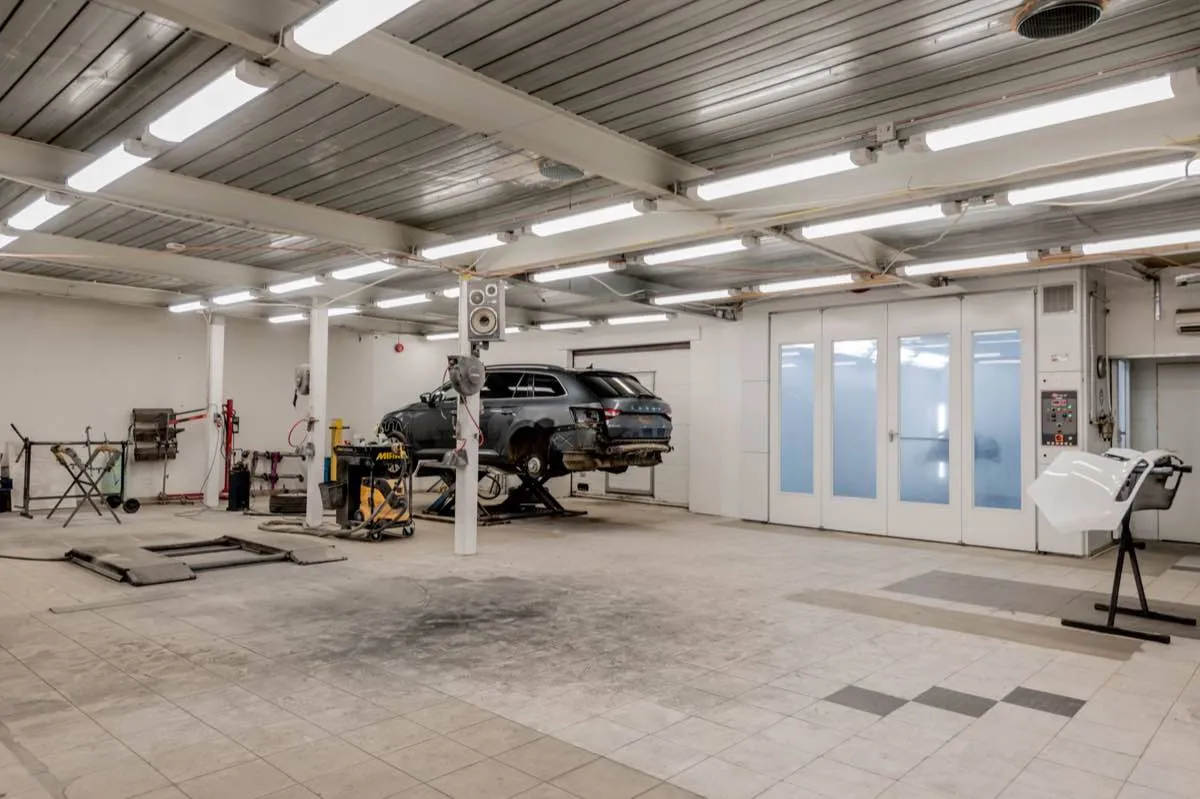
Warehouse & Distribution Floors
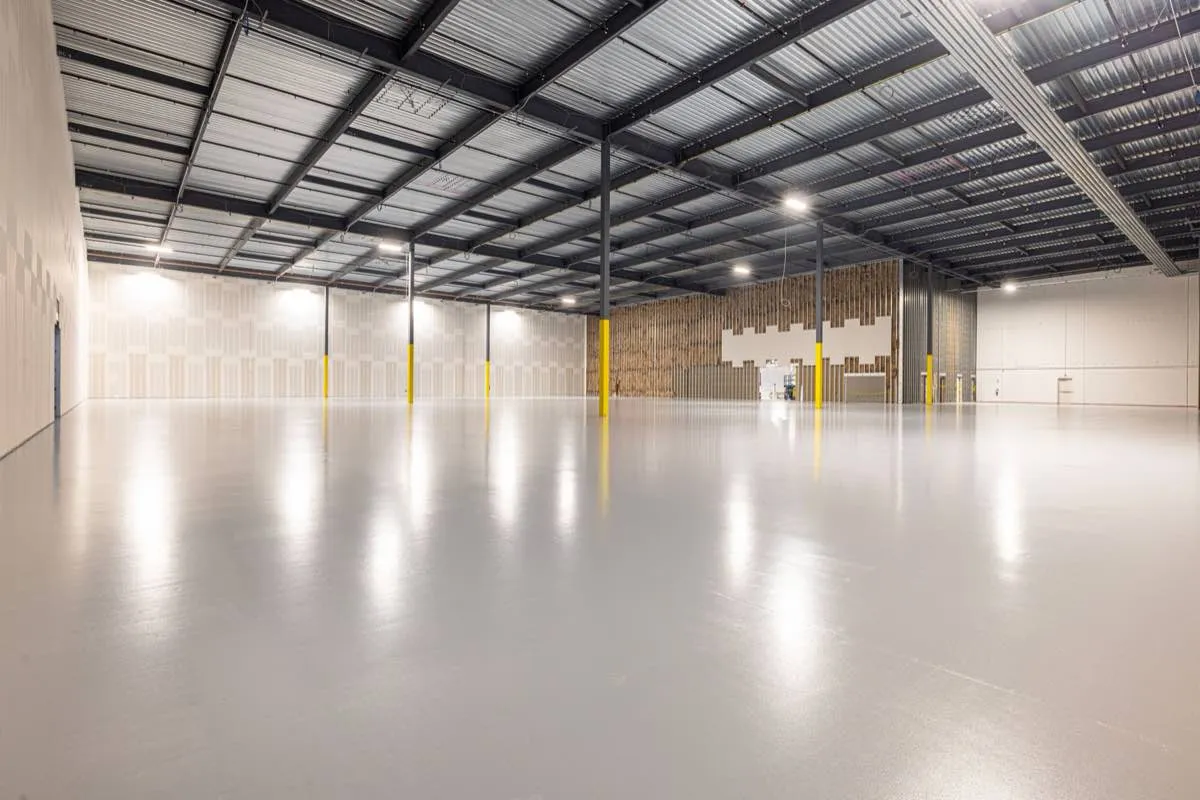
Warehouse and distribution floors are an operations problem before they are a coating problem, and the business case usually comes down to dust, light and joints. An uncoated slab abrades under hard-wheeled traffic and generates concrete dust continuously, which lands on inventory, gets into equipment bearings and packaging, and is a permanent low-grade cost nobody puts a number on.
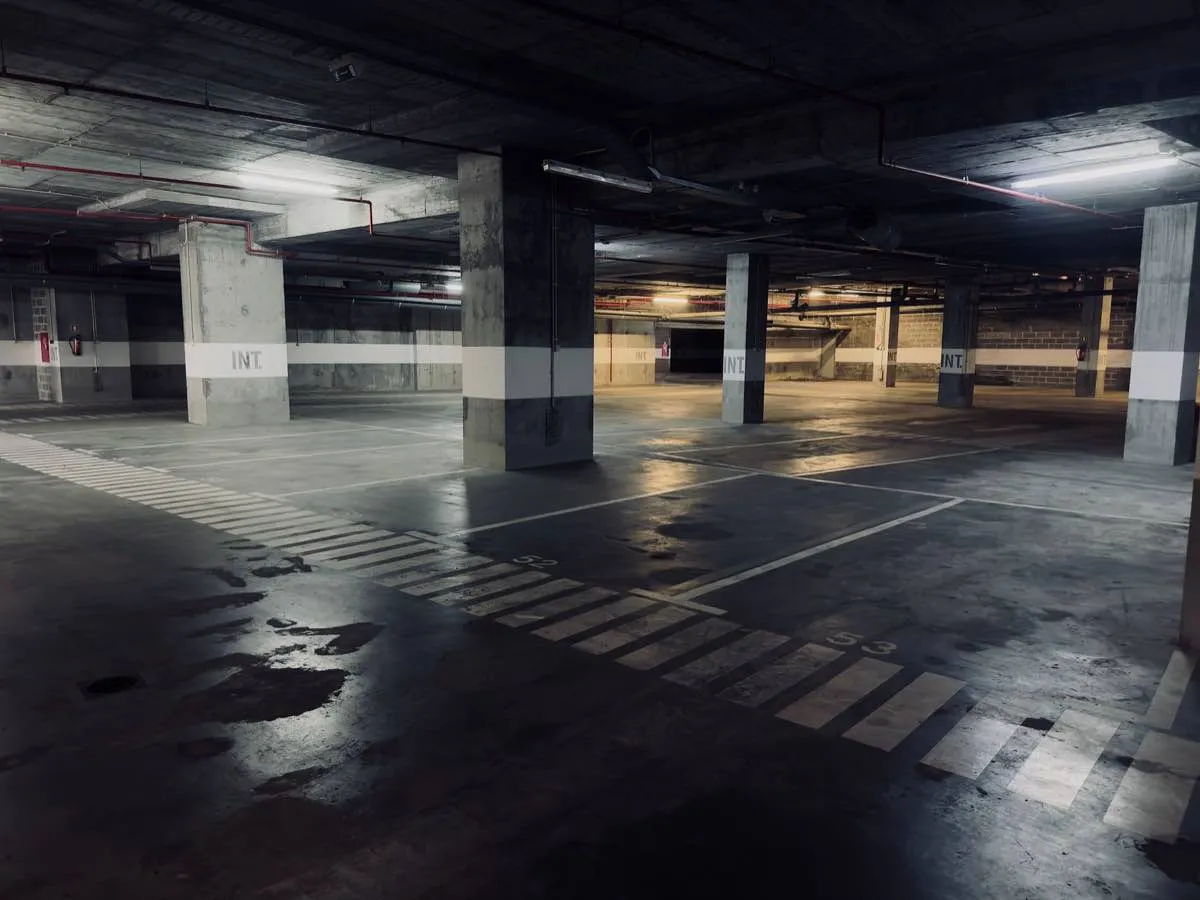
Urethane Cement Flooring
Urethane cement is the toughest flooring system we install and it is the correct answer for most wet processing environments in the Central Valley. It is a hybrid: polyurethane resin combined with cement and graded aggregate, trowel or screed applied at anywhere from about three-sixteenths to a quarter inch, and it behaves less like a coating and more like a new wearing surface bonded to the slab.
Quartz Broadcast Systems
A quartz broadcast system is the middle ground between a thin decorative coating and a full mortar floor, and it is one of the most useful builds in commercial work. Colored ceramic-coated quartz aggregate is broadcast into a wet epoxy base until the surface will absorb no more, the excess is swept and vacuumed, and then one or two clear or pigmented topcoats lock it in.

ESD & Anti-Static Flooring
ESD flooring exists to give a static charge somewhere to go other than through a component, a person, or an atmosphere that would rather not be ignited. Walking across an ordinary insulating floor in a dry Valley summer generates thousands of volts of static on a person, and a discharge far below what anyone can feel will damage sensitive electronics permanently, often without failing outright, which is worse because it fails in the field instead of on the bench.
Chemical-Resistant Flooring
Chemical-resistant flooring starts with a list, not a product. What lands on this floor, at what concentration, at what temperature, and how long before somebody cleans it up.
Medical & Cleanroom Flooring
Cleanroom and medical flooring is specified for what it does not do: it does not shed particles, it does not have joints for contamination to hide in, it does not react with the disinfectants used on it, and it does not create a surface that is hard to validate. Every one of those requirements pushes toward a monolithic self-leveling resinous floor with continuous integral coving and no seams anywhere, which is why tile and sheet goods keep losing ground in these spaces.
Concrete Grinding & Shot Blasting
Fresno Elite Epoxy Flooring provides concrete grinding and surface prep for Valley slabs before any resin or polish work begins. Valley concrete hides dust, irrigation stains, and soft paste under a skin that looks fine until coating peels.
Moisture Vapor Mitigation
Moisture vapor mitigation is the step that separates a floor that lasts from a floor that blisters, and it gets skipped constantly because it is invisible and it costs money before anything looks like progress. Concrete is porous.
Concrete Polishing & Densifying
Polished concrete is a finish rather than a coating, which is the entire reason to choose it: there is no film on top to blister, delaminate, yellow or peel, because the floor is the slab itself. We refine it mechanically with progressively finer diamond abrasives and harden it chemically with a lithium silicate densifier that reacts with free lime in the concrete to produce a denser, tighter, far more abrasion-resistant surface.
Floor Repair & Joint Filling
Joint filling is the highest-return maintenance work in any building with hard-wheeled traffic, and it is almost always deferred until the damage costs ten times what the filler would have. Here is the mechanism.
Line Striping & Safety Marking
Fresno Elite Epoxy Flooring stripes warehouse floors across the Central Valley logistics belt under heat and dust. Dust and pallet traffic erase weak paint before the next safety walk.
Garage Floor Coatings
Fresno Elite Epoxy Flooring coats Central Valley garages that bake in summer and take dust and hard-water drip all year long. Valley heat turns a closed garage into an oven by late afternoon from spring through early fall on most lots.
Flake Floor Systems
Fresno Elite Epoxy Flooring installs flake epoxy floors for Valley garages and light commercial bays that want hide-the-dust texture. Flake is popular here because valley dust and hard-water spots show less than on a solid field under bright afternoon light.
Metallic Epoxy Floors
Fresno Elite Epoxy Flooring installs metallic epoxy for Valley showrooms and feature rooms that want movement under hard daylight. Metallic pigment behaves differently under Central Valley sun than under soft coastal light.
Polyaspartic & Polyurea Coatings
Polyaspartic and polyurea coatings solve the two problems epoxy cannot: sunlight and downtime. Polyaspartic is an aliphatic polyurea, and aliphatic chemistry does not amber under ultraviolet light the way epoxy inevitably does, so any floor that sees sun through a roll-up door, a skylight or a storefront window needs one on top or it will yellow and eventually chalk.
Commercial Epoxy Flooring
Fresno Elite Epoxy Flooring builds commercial epoxy floors for Valley offices, retail back-of-house, and light industrial suites under hard sun and dust. Valley commercial slabs face dust infiltration, irrigation-driven moisture swings, and brutal afternoon heat through glass.
Commercial Kitchen & Restaurant Floors
Commercial kitchen flooring gets judged by a health inspector at the wall junction and by your own crew at the dish pit, and those two audiences want different things from the same slab. Fresno kitchens usually fail the first test, because quarry tile grout is porous and once the joints open the floor becomes a reservoir for grease and organic soil that no mop reaches.
Showroom, Retail & Office Floors
Fresno Elite Epoxy Flooring installs showroom and retail floors that must stay clean under bright Valley light and steady daily foot traffic. Retail slabs take dust, winter mud, and hard sun through storefront glass across long clear afternoons.
Solid Color Epoxy Coatings
Fresno Elite Epoxy Flooring pours solid-color epoxy when Valley clients want a simple, clean field without broadcast texture. A solid field is a prep exam under clear Central Valley light.
Patio & Pool Deck Coatings
Pool deck and patio coatings are the one corner of this trade where the wrong resin fails on schedule, and in Fresno the wrong resin is standard epoxy. Epoxy is an aromatic chemistry, so ultraviolet light ambers it and eventually chalks it, and a smooth dark film on an exposed slab stores heat until nobody will cross it barefoot in July.
Why Fresno Chooses Fresno Elite Epoxy Flooring
- ✓Over 15 years of industrial floor work across the Central Valley
- ✓Urethane cement, novolac and quartz systems for real food-plant chemistry
- ✓Shot blasting and diamond grinding, never an acid etch
- ✓Slab moisture tested to ASTM F1869 and F2170 before we quote
- ✓Phased, overnight and shutdown-window scheduling around production
- ✓USDA and FDA compliant integral coving and drain terminations
- ✓Se habla español
About Fresno Elite Epoxy Flooring in Fresno, CA
Fresno Elite Epoxy Flooring has spent over 15 years installing resinous and polished floors across Fresno and the Central Valley, and most of that work has been industrial rather than residential. This is a region built on growing, packing, processing, chilling and shipping food, and those buildings have floor requirements that a general coating contractor genuinely does not encounter.
A raisin plant, a tomato cannery, a stone fruit packing house, a dairy, a winery crush pad and a blast freezer each attack a floor in a different way.
So we specify against the exposure rather than the brochure. Organic acids from fruit sugars, lactic acid in a dairy, tartaric acid on a crush pad, caustic in a clean-in-place cycle, hot water and steam sanitation, thermal cycling across a freezer threshold, forklift and pallet-jack traffic, and USDA and FDA expectations for coving, drainage and cleanability.
That usually means urethane cement in the wet processing areas, novolac epoxy where the chemistry is aggressive, quartz broadcast where you need traction and impact resistance, and high-build epoxy with filled joints in the warehouse.
We also do the everyday work well: garage floor coatings, flake and metallic systems, showroom and retail floors, concrete grinding, polishing and densifying, moisture mitigation and joint repair. Every job starts with mechanical prep and a slab moisture test, and every job is scheduled around your operation rather than ours. Licensed, insured and bonded, written workmanship warranty, se habla español, and the estimate is free.
Communities We Serve
Fresno Elite Epoxy Flooring serves Fresno, CA and surrounding communities including:
How It Works
1. Walk the plant and test the slab
We ask what you process, how you clean, what drives on the floor and what the shutdown window is. Then we test the slab for moisture and look at the joints, the drains and the existing failures before we quote a system.
2. Grind or shot blast
Shot blasting for large open floors, diamond grinding at edges, around equipment and where a specific profile is needed. Old coatings and contamination come off mechanically, not chemically.
3. Repair, prime and detail
Joint filling, spall and crack repair, moisture-mitigating primer where readings demand it, then coving at the walls and terminations at drains and thresholds. Details are what pass an inspection.
4. Build the system and hand back
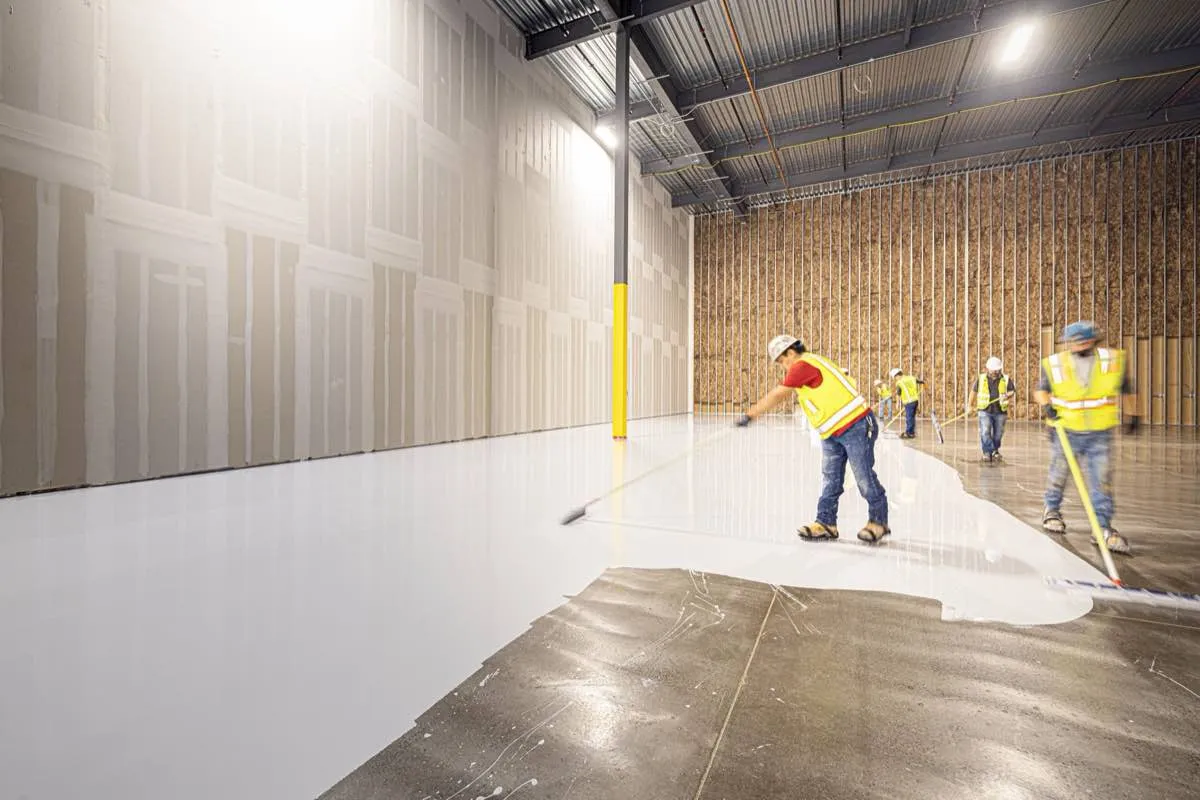
Base, broadcast and topcoat at specified thickness with the anti-slip level matched to how the floor is actually used, then a documented cure and a return-to-service time you can plan a shift around.
Recent Projects Across the Central Valley
Full gallery →What Fresno Customers Say
They pulled up the failed epoxy in our wash-down room and put in urethane cement instead. Two seasons of hot sanitation later and it looks the same as the day they left. The last contractor never even asked what we process.
Metallic floor in our showroom gets a comment every single day. Clean crew, on schedule, and it wiped up spilled coffee like it was glass.
Coated the packing floor and filled every joint over a shutdown weekend so we did not lose a day of the run. Forklift lanes still have crisp joint edges, which is more than I can say for the old floor.
Freezer and cooler floors done right, including the dock transitions where the old coating always let go first. They explained exactly why it had been failing there and fixed the cause.
Food Plant, Packing House & Warehouse Floors in the Valley
The Central Valley does not run on offices, it runs on packing houses, canneries, cold storage, dairies, wineries and distribution centers, and every one of them has a floor problem the average coating contractor has never seen. Fruit sugars and organic acids eat epoxy. Steam cleaning debonds it. Freezer floors move. We specify urethane cement, novolac and quartz systems for what your plant actually processes, and we schedule around your harvest window rather than ours.
- ✓Packing houses, canneries and processing plants
- ✓Cold storage, coolers and blast freezers
- ✓Dairies, creameries and beverage lines
- ✓Wineries, crush pads and breweries
- ✓Distribution and warehouse floors on the 99 and I-5
- ✓USDA and FDA compliant coving and drain detailing
Frequently Asked Questions
How much does epoxy flooring cost in Fresno?
A residential flake garage system on a sound slab generally runs about $6 to $10 per square foot installed. Industrial and food-plant systems are a different market: a urethane cement floor with integral coving and drain detailing typically lands well above a standard epoxy because it is a thicker, tougher, more labor-intensive build. We quote on square footage, prep condition and the chemical and thermal exposure, and the estimate is free and itemized.
Why does epoxy fail in a packing house or cannery?
Two reasons, and both are chemistry. Fruit sugars ferment into organic acids, and lactic, citric, acetic and tartaric acids all attack standard epoxy over time. Then there is thermal shock: a floor that gets hosed with hot water or steam expands at a different rate than the slab beneath it and eventually debonds.
Urethane cement has a coefficient of thermal expansion close to concrete and shrugs off both, which is why it is the correct material for food processing and epoxy is not.
Can you work around our production schedule?
That is most of the job in this valley. Packing and processing runs are seasonal and a line that is down in August costs far more than the floor. We phase by area, work nights, weekends and shutdown windows, and use fast-cure systems where a plant genuinely cannot stop. Tell us the window and we will tell you honestly whether the system you want fits inside it.
Does Fresno heat affect the installation?
Yes, and it is a real scheduling constraint. Resin pot life shortens dramatically as temperature climbs, so a product with a 30-minute working time in a cool shop can give you a fraction of that on a slab that sat under a metal roof through a 105-degree afternoon.
We start early, mix in small batches, and where the schedule allows we work the cooler part of the day. In winter the opposite applies and Tule fog mornings can hold enough surface moisture to matter, so we check dew point before anything goes down.
Do you handle cold storage and freezer floors?
Yes, and they need their own specification. A freezer floor is dealing with thermal contraction, moisture migration and, at those temperatures, materials that most coatings simply are not formulated for. We use systems rated for the service temperature and for the thermal cycling between the freezer, the dock and the ambient warehouse, and we detail the transitions properly, because the doorway between two temperature zones is where these floors fail.
Is polished concrete a better option for a warehouse?
Sometimes, and we will tell you when. Polished and densified concrete has no film to delaminate, tolerates a high moisture vapor emission rate that would require expensive mitigation under a coating, cuts lighting load because it reflects, and is maintained with a scrubber rather than recoated.
It is not the answer where you need chemical resistance or a specific color, and it needs a slab flat and sound enough to take it. On the right building it is both cheaper and longer-lived than a coating.